
You have a shot in your head. You know the light, the distance, the exact still it borrows from. The problem is that it is in your head, and your cinematographer is the person who has to build it. Director and cinematographer collaboration lives or dies on this handoff, the moment a reference in your mind becomes a frame you both can see. This is how to describe a shot to your DP so the film in your head and the film on the day are the same film.
The reference only helps if you can both see it
Most visual references die in transit. You find a still that is exactly right, you drop it into a chat, it scrolls away under twenty other messages, and by the time you are on set nobody can find it. Or you send a folder over WeTransfer, your DP downloads it, opens it in their own viewer, and now there are two versions of your reference wall that will never quite match again.
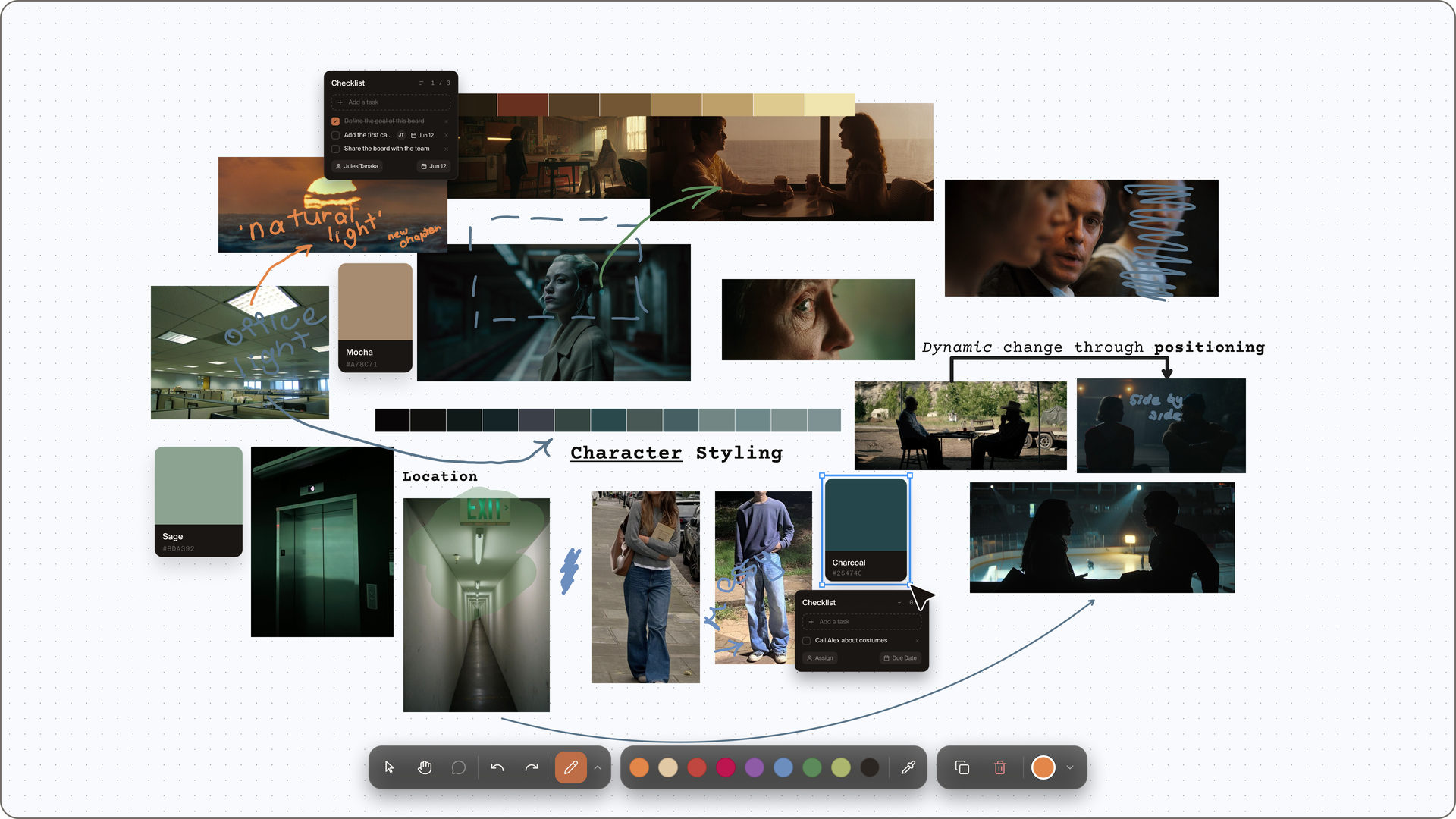
The fix is not sending references faster. It is not sending them at all. The reference should live on one surface that you and your cinematographer both stand in, so there is nothing to attach, nothing to download, and no version three drafts behind. When the frame you are pointing at is the same frame they are looking at, half the miscommunication is already gone.
Show the frame, then say what you want from it
A reference on its own is ambiguous. You send a still from a film you love and your DP cannot tell whether you mean the light, the lens, the colour, the blocking, or just the mood. They guess. Sometimes they guess right. On set, guessing costs the scene.
So pair every reference with intent. Show the frame, then say the one or two things you actually want from it. Not this whole shot, but the way the key light only catches one side of her face. Not copy this, but the feeling of being too far away to help. A reference is a starting point, not a photocopy, and naming what you want turns a pretty picture into a usable instruction.
Then say what the shot is doing in the story. Your cinematographer makes better choices when they know why the shot exists. A close up that exists to catch a lie is lit and held differently from a close up that exists to catch grief, even if the reference frame is identical. When the narrative purpose sits next to the reference, your DP can honour the intent even when the location refuses to give you the exact frame.
Talk in what the scene needs, not just in numbers
The shot list is a conversation between a director and a cinematographer, not a set of orders. The most useful version of that conversation happens in the language of what the scene needs, and lets your DP translate it into the language of the camera.
- Distance. How close the audience is allowed to get, and when. Wide and outside the moment, or tight and unable to look away.
- Movement. Whether the camera watches or follows. A static frame observes. A slow push commits. A handheld frame refuses to settle.
- Lens and light. The feeling of the space. Compressed and airless, or open and exposed. Hard and unforgiving, or soft enough to forgive.
You bring the intent, your cinematographer brings the means. When you say I want this to feel like she is being watched, a good DP will offer you the lens, the height, and the movement that deliver it, often better than the version you had in mind. That trade only works when the reference and the intent are both in front of you, so the conversation is about the same picture.
Name references specifically
Vague references produce vague shots. Cinematic, gritty, elevated. Every unmade film is all three, and none of the three tells your DP anything. Replace the adjective with the image that made you reach for it.
A specific comparison earns trust that an adjective never will. This photographer's stillness. This film's third act, once it goes cold. This single frame you keep coming back to. When you can point at an exact reference and say the light does this, your cinematographer stops interpreting your taste and starts building to a target you have both agreed on.
Keep the references and the treatment together
Your references make the most sense when they sit beside the words that explain the film. A frame next to the treatment paragraph it belongs to reads as intent. The same frame alone in a folder reads as a nice picture. Keep them together, so a collaborator can drift from the prose to the exact image behind it and back again, and never has to ask which reference went with which scene.
This is the case CineFlow was built for. CineFlow is the creative space where filmmakers develop ideas into films, together. In practice that means the moodboard, the lookbook, the treatment, and your notes to your DP all live on one surface the whole camera team can reach. There is no attachment to send and no version to reconcile. You point, they look, and you are both looking at the same film.
From the conversation to the shot list
Once you and your cinematographer have talked through the references, that conversation has a natural home. It becomes the shot list, where each reference and each piece of intent turns into a specific setup with a size, a movement, and a lens. Because the references and the shots live in the same place, the reasoning never gets separated from the plan, and the shot you argued for in prep is the shot that reaches the floor.
So put the reference where your DP can see it, pair it with what you actually want and why, speak in what the scene needs, and keep it all beside the words. The films that look the way their directors intended are rarely the ones with the most references. They are the ones where the director and the cinematographer were always looking at the same frame.