
A shot list is the plan for every setup the camera will make. It takes the film you have been building on boards, in references, and in the treatment, and turns it into a sequence of specific shots the camera team can execute. A good shot list is not a cage. It is a shared plan that holds the vision steady while still leaving room for the day. This is how to write one.
What a shot list is, and what it is not
A shot list is a detailed plan of every camera setup, scene by scene, with the size, the movement, the lens, and the reason for each shot. It is built by the director and the cinematographer together, because it is the document where the look becomes a set of decisions the crew can act on.
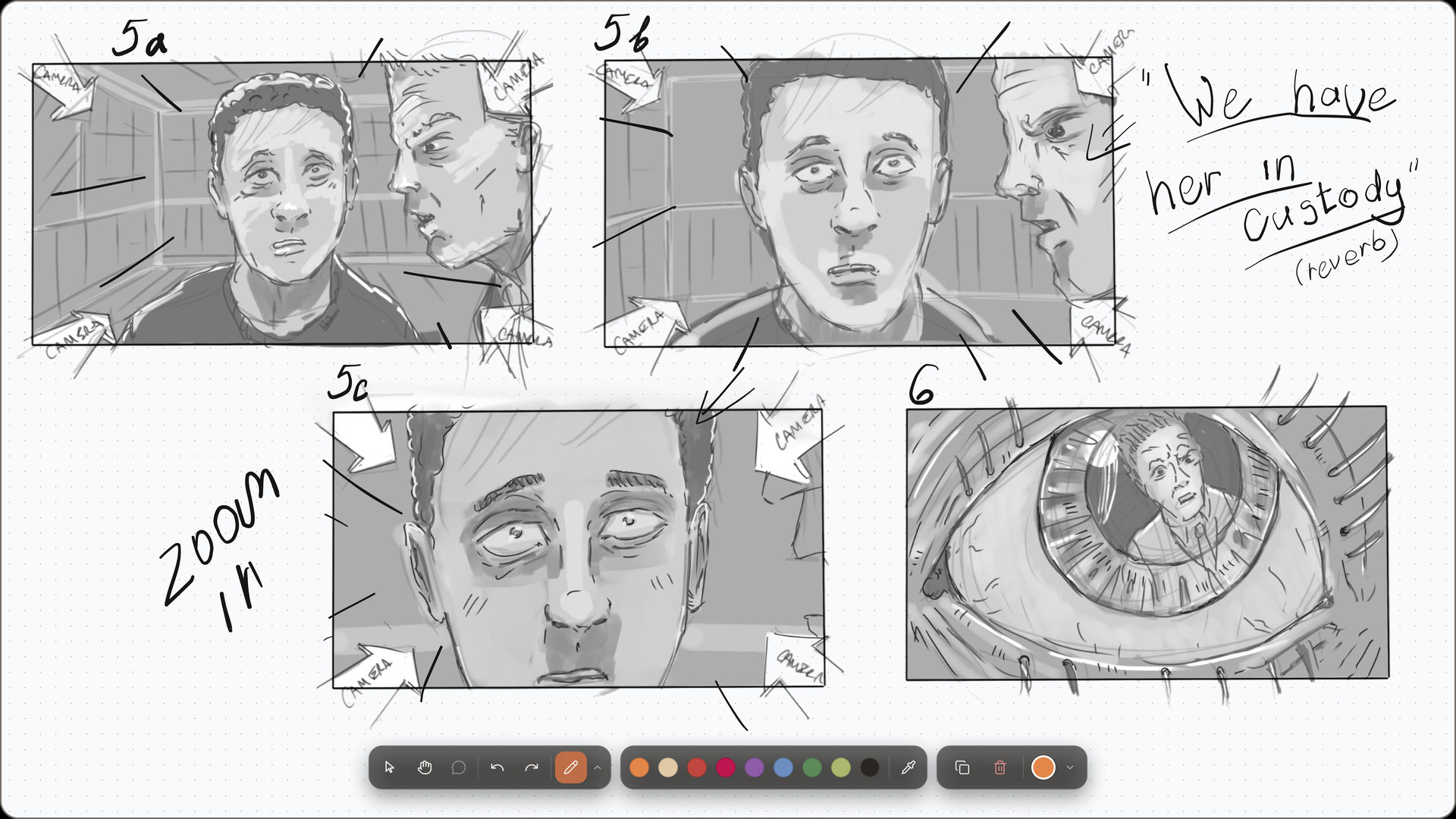
It is not a storyboard. A storyboard shows what the shot looks like. A shot list says how it gets made. It is not a schedule either. The schedule decides when the shots are filmed. The shot list decides how. And it is not a fixed contract. It is a living plan that changes on set as the location, the light, and the actors reveal what the scene actually wants. The list is the starting point, not the law.
The anatomy of a shot
Every line on a shot list should carry enough to be unambiguous, and no more. The useful fields are these.
- Shot number. A unique label, usually a scene number and a letter, so 4A is the first setup of scene four and 4B the second. Letters let you slot a shot in later without renumbering everything after it.
- Shot size. How much of the subject fills the frame. The common sizes run from wide, to full, to medium, to medium close up, to close up, to extreme close up, plus the insert for a detail like a hand on a key.
- Camera movement. How the camera behaves. Static to observe, a pan or tilt to follow, a dolly to push in or pull back, a track to move alongside, a crane for height, a steadicam or handheld to move with the action.
- Lens. The feeling of the space. A wide angle opens the room and exaggerates distance. A standard lens sits near human vision. A telephoto compresses and isolates. You do not need a millimetre on every line, but the intent should be clear.
- Framing. A short note on composition. Over the shoulder, low angle, subject frame left, room to move into.
- Narrative purpose. The most important field, and the one most people skip. What does this shot tell the audience that the last one did not? A shot with no purpose is a shot the edit will cut, so if you cannot name the reason, question the shot.
Cover the scene
A shot list is only as good as its coverage, the full set of shots the edit needs to build the scene more than one way. Thin coverage traps the editor into using a shot that does not work because there is no alternative. Solid coverage usually includes a master that holds the whole scene, mediums and two shots for the exchange, close ups for the beats that turn, inserts for the details the story leans on, and cutaways for reactions and atmosphere.
You do not need every possible angle. You need enough options to control pace and emphasis in the edit. When you and your cinematographer decide coverage together, you are really deciding how the scene will be cut, long before anyone sits down to cut it.
Order for the day, not for the story
Write the list in the order that plays, then shoot it in the order that is efficient. The two are rarely the same. Shooting almost always groups by setup, not by story sequence, so you light once and get everything from that angle before you turn around.
A common order shoots the master first, while the actors are fresh and the set is fully dressed, then the wider coverage, then the mediums and two shots, then the close ups and inserts once the light is refined and the performances have warmed up. This minimises relights and camera moves, and it lets the actors build toward the intensity of the close up rather than spending it on the first take of the day. Note the shooting order on the list so the plan and the floor agree.
Build it from your references, not from a blank page
A shot list written cold, straight from the script, tends to be generic. A shot list written next to your references is specific. When the reference frames, the storyboard panels, and the treatment are all in view, each shot inherits a reason. This close up borrows that photograph's stillness. This push in delivers the moment the treatment promised. The list stops being a spreadsheet of camera positions and becomes the visible plan for the film you have been developing all along.
CineFlow is the creative space where filmmakers develop ideas into films, together. The shot list sits on the same surface as the references and boards it came from, and your cinematographer builds it with you in real time rather than receiving a document to react to. The reasoning behind each shot stays attached to the shot, all the way to the floor.
Keep it connected so it never goes stale
The quiet failure of most shot lists is that they go out of date. A scene gets cut, a location changes, the order shifts, and the list on set is three versions behind the plan in someone's inbox. The fix is to stop treating the shot list as a separate file and start treating it as one connected part of the production.
When the shot list is connected to the schedule, a change in one reaches the other. Reorder a shoot day and the shots follow. The cast and crew a shot needs flow through to the day it is scheduled and on to the call sheet. Cut a scene in the breakdown and its shots leave the list. Nobody retypes anything, and the version on the monitor is the current one because there is only one version.
So give every shot a number, a size, a movement, a lens, and a reason. Cover the scene enough to cut it more than one way. Order it for the day, build it from your references, and keep it connected to the rest of the film. The shot list that gets a scene made is not the longest one. It is the one that everyone was working from, still current on the morning you shoot it.